Irrigation Pump Size Calculator
Find the ideal pump for your sprinkler system, drip irrigation, or agricultural spray. Enter your area, pipe details, and pressure needs to get a tailored pump recommendation.
List of the Best Irrigation Pump:


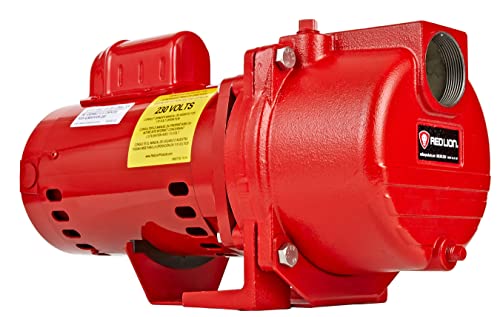


Irrigation Pump Sizing – Complete Guide
Why Proper Sizing is Critical
An irrigation pump that's too small will leave your lawn parched, while an oversized pump wastes energy and money. The right pump ensures uniform water distribution, protects your irrigation components from pressure damage, and operates efficiently for years. This calculator considers your area, application rate, piping, and elevation to recommend the optimal pump.
Key Factors in Irrigation Pump Selection
Flow Rate (GPM)
Determined by your area and application rate. For example, 1 acre (43,560 sq ft) at 1″ per hour requires about 18 GPM. Our calculator converts your area and rate into required gallons per minute.
Total Dynamic Head (TDH)
Sum of pressure head (PSI converted to feet), elevation change, and friction loss in pipes. Every 1 PSI = 2.31 feet of head. Friction depends on pipe diameter, length, and flow.
Pipe Diameter & Length
Long or narrow pipes create significant friction. Increasing pipe size by one size can reduce friction loss by 50%. For flows over 30 GPM, 1.5″ or 2″ pipe is recommended.
Pressure Requirements
Different sprinklers need different pressures: spray heads (30 PSI), rotors (45-60 PSI), drip (20-30 PSI). Our calculator uses your input to size the pump accordingly.
Pump Types for Irrigation
| Pump Type | Best For | Head Capability | Efficiency | Typical Applications |
|---|---|---|---|---|
| Centrifugal (End Suction) | Small to medium lawns, gardens | Up to 100 ft (43 PSI) | 65-75% | Residential sprinklers, drip |
| Multi-Stage (Booster) | High pressure, long distances | Up to 300 ft (130 PSI) | 60-70% | Golf courses, high-rise |
| Turbine / Submersible | Deep wells, agricultural | Up to 500 ft | 75-85% | Large farms, orchards |
| Self-Priming | Lift from ponds or tanks | Up to 50 ft | 55-65% | Surface water sources |
Step-by-Step Sizing Method
1. Calculate Required Flow
- Area (sq ft) × application rate (in/hr) × 0.623 = GPH
- Divide by 60 for GPM
- Example: 5000 sq ft × 1″ × 0.623 = 3115 GPH → 52 GPM
2. Determine Total Head
- Pressure head: PSI × 2.31
- Elevation head: vertical rise in feet
- Friction loss: 1-5 ft per 100 ft of pipe
- Add 10% safety margin
3. Match Pump Curve
- Find pump that delivers required GPM at calculated TDH
- Check NPSH for suction conditions
- Consider pump efficiency for long-term savings
4. Account for Future
- Add 10-20% capacity for future expansion
- Consider variable frequency drives (VFD) for energy savings
- Plan for irrigation zone additions
Irrigation Sizing Examples
Residential Lawn (5,000 sq ft)
Area: 5,000 ft², 1″/hr → 52 GPM. 1″ pipe, 100 ft horizontal, 10 ft lift, 45 PSI → TDH ≈ 114 ft. Recommended: 60 GPM @ 115 ft (1.5 HP centrifugal).
Small Farm (2 acres)
Area: 87,120 ft², 1.5″/hr → 180 GPM. 2″ pipe, 300 ft, 20 ft lift, 50 PSI → TDH ≈ 140 ft. Turbine pump: 200 GPM @ 140 ft (7.5 HP).
Drip System (1 acre)
Area: 43,560 ft², 0.5″/hr → 45 GPM. 1.25″ pipe, 200 ft, 5 ft lift, 25 PSI → TDH ≈ 80 ft. Self-priming pump: 50 GPM @ 80 ft (2 HP).
Frequently Asked Questions
How do I know if my pump is too small?
Common signs: low pressure at sprinklers, slow rotation of rotor heads, dry spots in the lawn, pump running continuously, and high energy bills for little output. Measure pressure at the farthest head – if it's below 30 PSI for spray heads, you need more pump.
Can I use a domestic water pump for irrigation?
Yes, but only for small areas. Domestic pumps are designed for household pressure (40-60 PSI) and limited flow. For lawns over 1,000 sq ft, you'll need a dedicated irrigation pump with higher flow capacity.
What is the best pipe size for irrigation?
Rule of thumb: up to 20 GPM → 1″, 20-40 GPM → 1.25″, 40-80 GPM → 1.5″, 80-150 GPM → 2″, 150+ GPM → 3″. Larger pipe reduces friction and allows your pump to run more efficiently.
How much pressure do I need for drip irrigation?
Most drip systems operate at 20-30 PSI. Higher pressure can cause emitters to pop off or mist. If your pump produces higher pressure, install a pressure regulator at the manifold.
Should I oversize my irrigation pump?
Oversizing by 10-15% is acceptable to account for wear and future expansion. However, oversizing by more than 20% wastes energy and can damage sprinkler components. Use a VFD for flexibility if you need variable flow.
How do I reduce friction loss in long pipe runs?
- Increase pipe diameter (cheapest improvement)
- Reduce number of elbows and fittings
- Use smooth PVC or HDPE pipe
- Keep pipe runs as straight as possible
- Install a booster pump if needed
Maintenance Schedule for Irrigation Pumps
| Task | Frequency | Steps | Benefit |
|---|---|---|---|
| Check strainer / filter | Weekly (during season) | Clean debris from suction strainer | Prevents cavitation and flow loss |
| Inspect impeller | Every 6 months | Check for wear, clean debris | Maintains efficiency |
| Lubricate bearings | Annually | Grease as per manufacturer | Extends pump life |
| Check pressure switch | Quarterly | Test cut-in/cut-out settings | Ensures consistent pressure |
| Winterize | Seasonal | Drain and blow out lines | Prevents freeze damage |
Troubleshooting Common Irrigation Pump Issues
Low Pressure at Sprinklers
Causes: Clogged filter, undersized pump, friction loss, partially closed valve, worn impeller.
Solutions: Clean filter, check pump curve, increase pipe size, fully open valves, replace impeller.
Pump Starts and Stops Frequently
Causes: Pressure tank waterlogged, pressure switch set incorrectly, leak in system.
Solutions: Drain and recharge tank, adjust pressure switch, find and fix leaks.
Pump Won't Prime
Causes: Air leak on suction side, foot valve stuck, water level too low.
Solutions: Check all suction joints, clean or replace foot valve, lower suction pipe.
Excessive Noise or Vibration
Causes: Cavitation, loose mounting, bent shaft, debris in impeller.
Solutions: Check NPSH, tighten mounting, replace shaft, clean impeller.