Water Pump Flow Rate Calculator
Measure your pump's actual flow rate using the container fill method or estimate flow from pipe size and velocity. Perfect for well pumps, irrigation pumps, and booster systems.
Method 1: Container Fill Test
Fill a container of known size and time how long it takes. This gives you the most accurate real-world flow rate.
Method 2: Pipe Velocity Estimate
Estimate flow based on pipe diameter and water velocity. Useful when you can't do a fill test.
List of the Top 10 Best Water Pump:

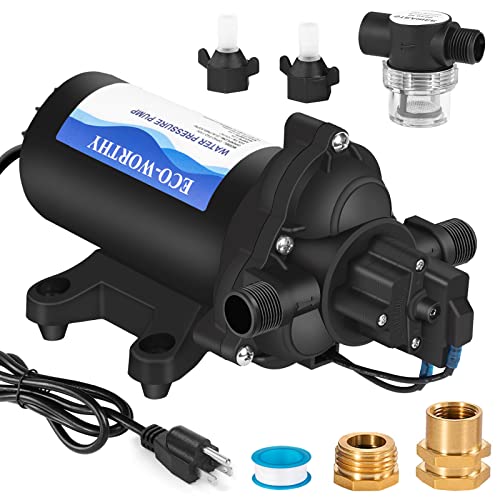


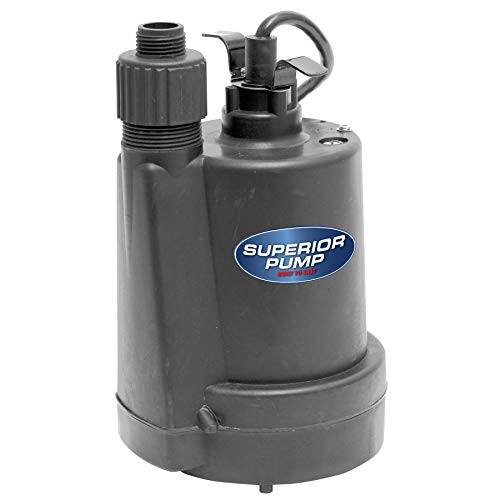


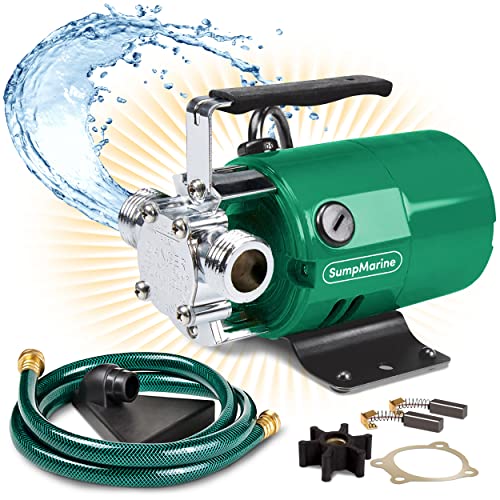


Water Pump Flow Rate – Complete Guide
What is Flow Rate and Why Does It Matter?
Flow rate measures the volume of water a pump moves over time, typically expressed in gallons per minute (GPM), liters per minute (LPM), or gallons per hour (GPH). Knowing your pump's actual flow rate is essential for irrigation planning, filter sizing, pressure tank selection, and ensuring your well or municipal supply can meet demand. Our calculator provides two methods to determine flow rate: the container fill test (most accurate) and pipe velocity estimation (useful when direct measurement isn't possible).
Factors That Affect Pump Flow Rate
Pump Horsepower & Type
Higher HP pumps generally move more water, but the pump curve matters more than raw HP. Centrifugal pumps have different flow characteristics than positive displacement pumps. Always check the manufacturer's performance curve.
Total Dynamic Head (TDH)
As head pressure increases, flow rate decreases. A pump rated for 20 GPM at 40 PSI may only deliver 10 GPM at 60 PSI. Our calculator helps you measure actual flow under your specific conditions.
Pipe Diameter & Length
Narrow or long pipes create friction that reduces flow. For example, 1″ pipe can carry about 20 GPM, while 1.5″ pipe can carry 50 GPM at the same velocity. Fittings and elbows add additional resistance.
Suction Conditions
Pump intake restrictions, partially closed valves, or clogged strainers can significantly reduce flow. NPSH (Net Positive Suction Head) issues can cause cavitation, further reducing performance.
Flow Rate Reference Table
| Pipe Size (inches) | Max Flow (GPM) @ 5 ft/s | Max Flow (GPM) @ 10 ft/s | Typical Application | Pressure Loss (ft/100ft) |
|---|---|---|---|---|
| ½" | 5 | 10 | Small faucets, drip lines | 8-12 |
| ¾" | 10 | 20 | Residential branches | 4-7 |
| 1" | 20 | 40 | Main supply lines | 2.5-4 |
| 1¼" | 35 | 70 | Irrigation mains | 1.5-2.5 |
| 1½" | 55 | 110 | Large irrigation, hydrants | 0.8-1.5 |
| 2" | 100 | 200 | Commercial, fire lines | 0.4-0.8 |
| 3" | 250 | 500 | Municipal, agricultural | 0.15-0.3 |
How to Measure Flow Rate Accurately
Bucket Test Method
- Use a container with known volume (5-gallon bucket works best)
- Open the faucet or outlet fully
- Time how many seconds to fill the container
- Calculate: Volume (gallons) ÷ Time (seconds) × 60 = GPM
- Run the test 3 times and average for accuracy
Flow Meter Method
- Install a paddlewheel or ultrasonic flow meter
- Provides continuous, real-time flow data
- Most accurate method for permanent installations
- Cost: $50-$500 depending on pipe size and accuracy
Pressure-to-Flow Method
- Use pump curve: find GPM at measured pressure
- Requires pump manufacturer's performance data
- Less accurate for old or worn pumps
- Best for design calculations, not field verification
Velocity Method
- Measure water velocity with a flow meter or timing method
- Calculate: Area (sq ft) × Velocity (ft/s) × 7.48 × 60 = GPM
- Good for large pipes where bucket test isn't practical
- Requires accurate velocity measurement
Flow Rate Examples
Residential Faucet
5-gallon bucket filled in 45 seconds → 5 ÷ 45 × 60 = 6.7 GPM. Typical for a well-maintained home water system. If below 5 GPM, check for clogs or undersized piping.
Irrigation Pump
55-gallon drum filled in 2 minutes 15 seconds (135 sec) → 55 ÷ 135 × 60 = 24.4 GPM. Acceptable for small to medium irrigation systems. If below 20 GPM, check pump performance.
Well Pump (1 HP)
100-gallon tank fills in 3 minutes 20 seconds (200 sec) → 100 ÷ 200 × 60 = 30 GPM. Good for a 1 HP submersible pump at moderate head. If below 20 GPM, inspect impeller.
Frequently Asked Questions
What is a good flow rate for a house?
Most homes need 6-12 GPM for comfortable use. A single shower uses 2-2.5 GPM, a washing machine uses 2-3 GPM, and a garden hose uses 5-10 GPM. If your flow is below 5 GPM, consider a booster pump or larger pipes.
How do I convert GPM to LPM?
1 GPM = 3.785 LPM. Our calculator does this conversion automatically. For a quick estimate, multiply GPM by 3.8 to get LPM.
Why does my pump's flow rate drop over time?
Common causes include: clogged impeller, worn seals, mineral buildup on pipe walls, partially closed valves, and pump wear. Test flow rate monthly to catch performance decline early.
What is the difference between flow rate and pressure?
Flow rate is the volume of water moved (GPM), while pressure is the force pushing water (PSI). They are inversely related: as pressure increases, flow rate typically decreases. A pump curve shows the relationship between the two.
Can I use this calculator for any pump type?
Yes! The container fill method works for any pump type (submersible, centrifugal, jet, diaphragm) as long as you can collect water at the outlet. The velocity method works for pipe flow regardless of pump type.
How often should I check my pump's flow rate?
- Monthly: Quick bucket test to catch major issues
- Quarterly: Accurate timed fill test with record keeping
- Annually: Full pump curve verification with pressure gauge
- Before and after: Any major plumbing changes or repairs
Troubleshooting Low Flow Rate
Low Flow at All Fixtures
Causes: Clogged strainer, pump wear, partially closed main valve, undersized supply pipe.
Solutions: Clean strainer, replace impeller, fully open valve, upgrade pipe size to reduce friction.
Flow Drops When Second Fixture Opens
Causes: Undersized pump, insufficient supply pipe, pressure tank too small.
Solutions: Upgrade pump, increase pipe diameter, add larger pressure tank for storage.
Flow Rate Below Pump Rating
Causes: Worn impeller, air leaks on suction side, NPSH issues, partially clogged discharge.
Solutions: Replace impeller, seal suction leaks, check water level in well, clean discharge line.
Flow Rate Fluctuates
Causes: Air in system, pump cycling, water level changes, faulty pressure switch.
Solutions: Bleed air, adjust pressure tank settings, check well recovery rate, replace pressure switch.